Roll Label Specifications: Match Labels to Your Applicator
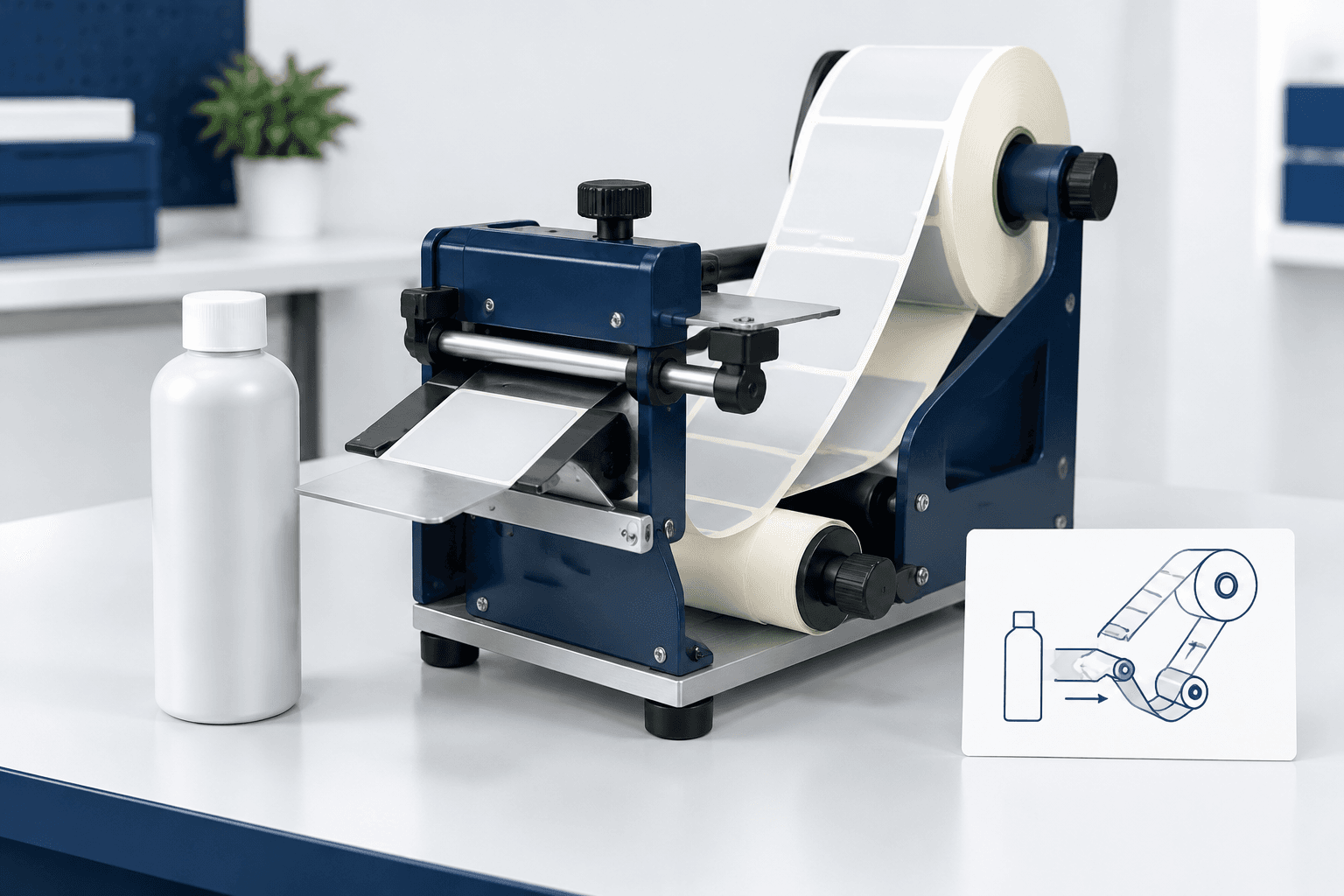
Table of Contents
- Start With the Applicator Requirements
- Confirm Roll Geometry and Label Orientation
- Specify Pitch, Liner Width, and Detection
- Compare Application Methods
- Run an Applicator Trial
- Account for Trials and Rejected Labels
- Frequently Asked Questions
- Prepare Your Roll Label Review
Roll label specifications should match the applicator’s documented limits—not just the label artwork and container dimensions. Confirm roll geometry, unwind direction, liner construction, sensing, and dispensing behavior, then approve a representative trial before ordering production quantities.
Roll Label Specifications: Start With the Applicator Requirements
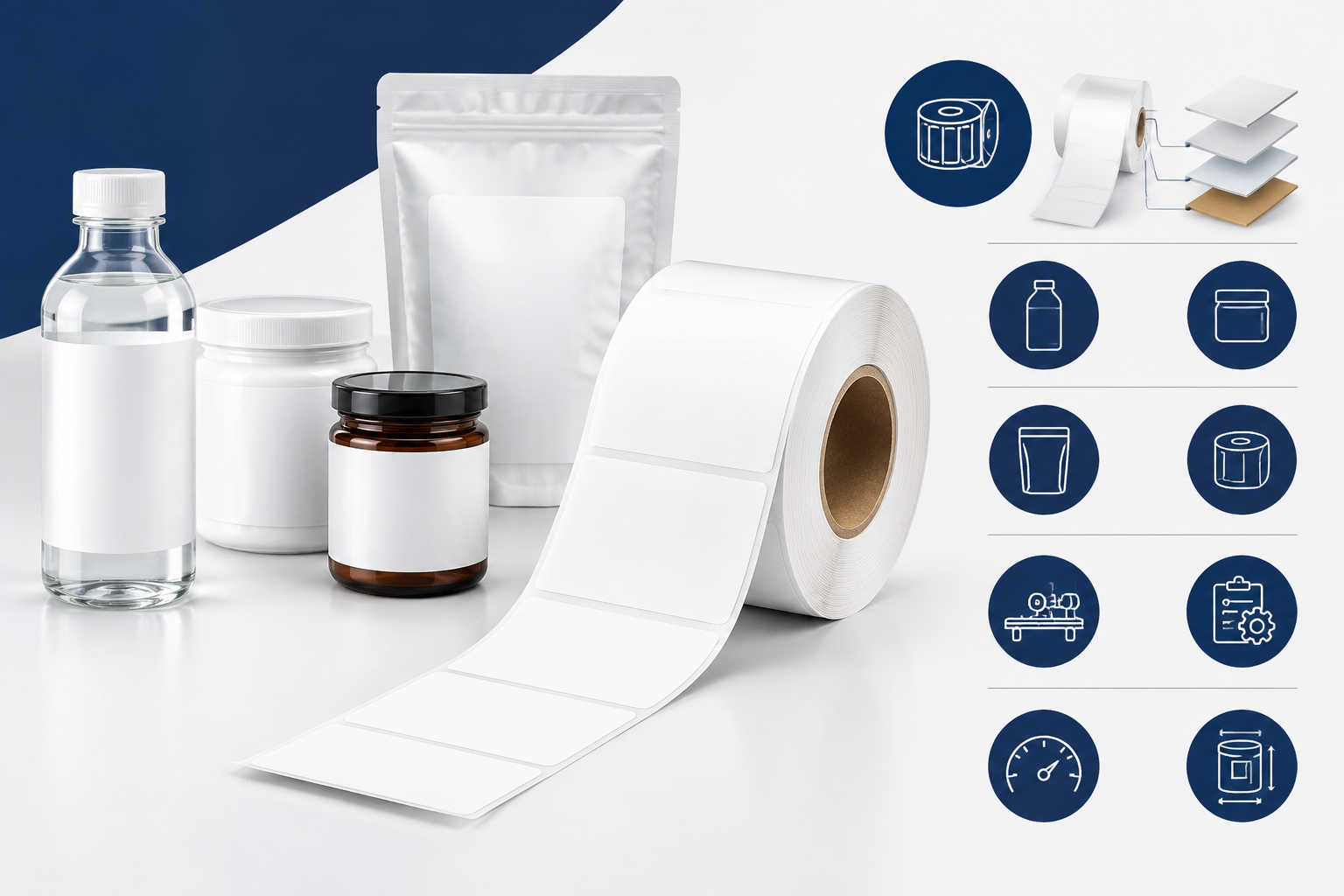
Roll label specifications define the finished label, backing web, and wound roll that an operator or machine must handle. Buyers should send the supplier the applicator make and model, equipment limits, container drawing, label dimensions, unwind drawing, liner requirements, sensor details, and intended operating speed.
CosunPack’s roll labels for bottles, jars, and pouches are the relevant format, but a product listing does not establish compatibility with a particular machine.
Keep adhesive qualification separate. A label can feed correctly yet lift from the container; it can also adhere well but fail to dispense. Use the label adhesive selection guide for the surface-and-exposure decision.
Table of Contents
Confirm Roll Geometry and Label Orientation
A roll must fit the unwind assembly and present the correct label edge to the container. Get the equipment supplier or contract packer to approve the roll drawing before artwork release. The artwork proof alone cannot confirm either condition.
Core Size, Maximum Diameter, and Roll Winding
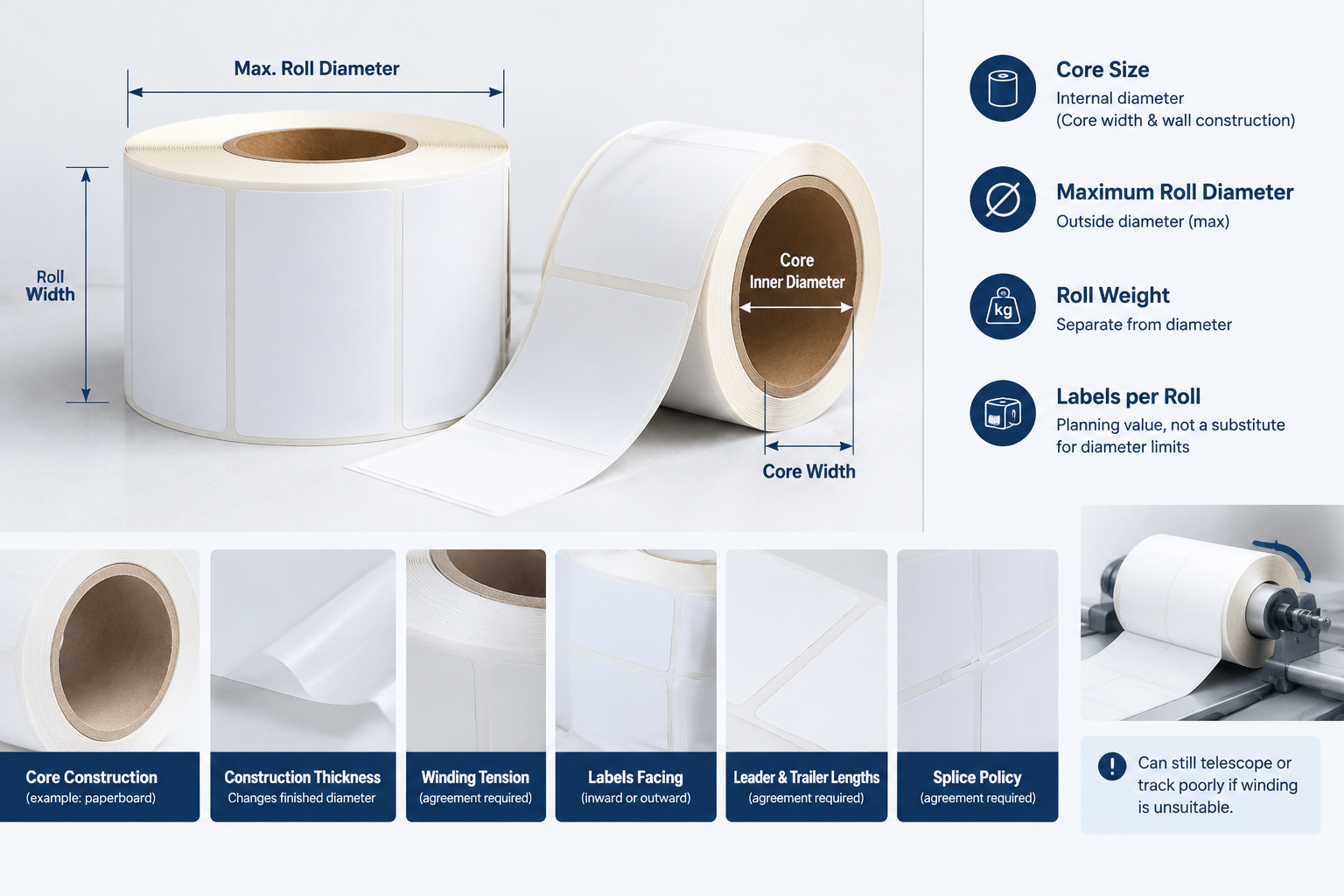
Specify label roll core size as the internal diameter, with core width and any required material or wall construction. Document maximum roll outside diameter and roll weight separately. Use millimeters and inches where needed for the US equipment team, identifying which units govern.
Labels per roll is a planning value—not a substitute for diameter limits. Construction thickness changes the finished diameter. Also agree winding tension, labels facing inward or outward, leader and trailer lengths, and splice policy. A physically fitting roll can still telescope sideways or track poorly if winding is unsuitable.
Leading Edge, Artwork Orientation, and Unwind Drawings
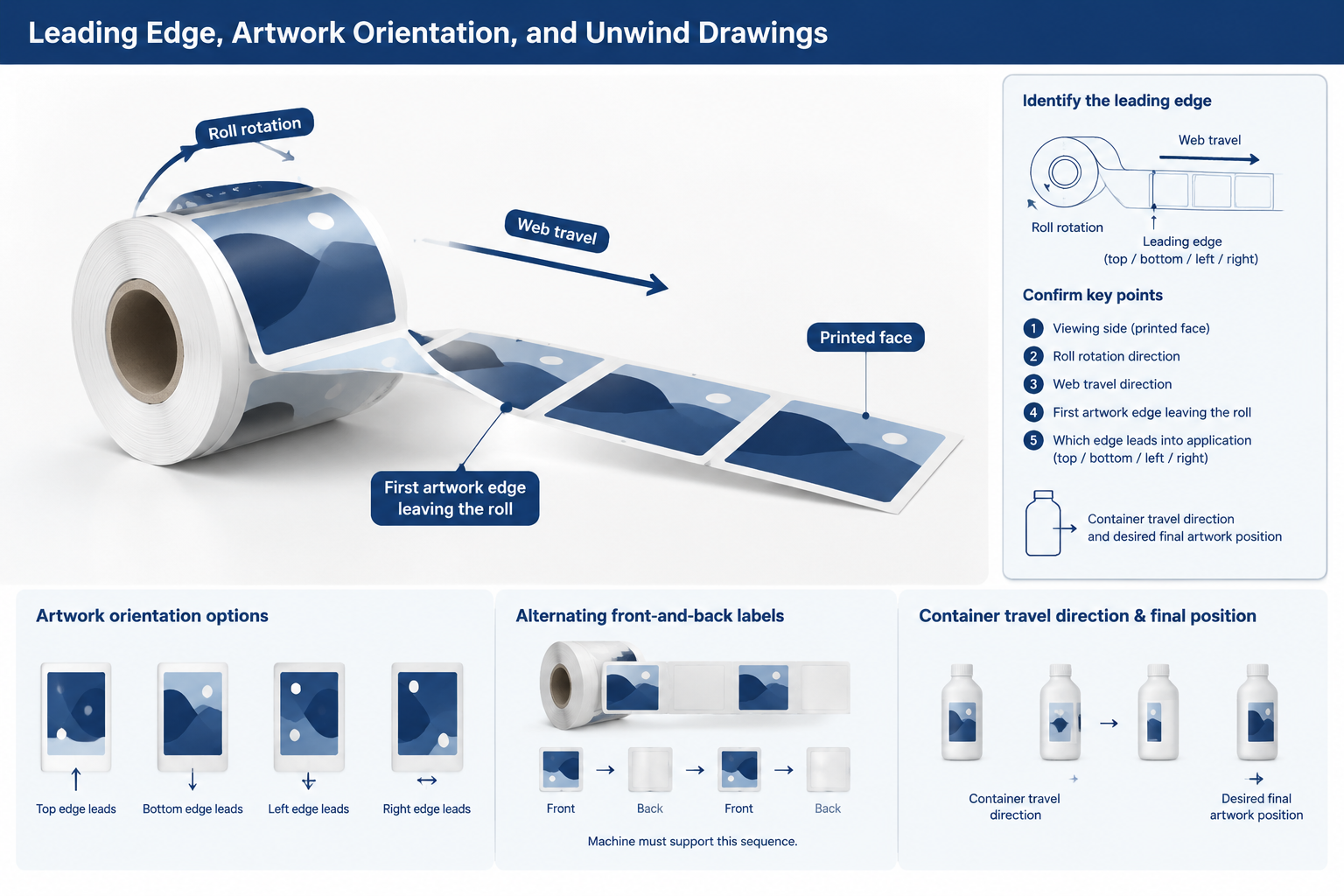
Confirm label unwind direction with a signed drawing showing the viewing side, roll rotation, web travel arrow, printed face, and first artwork edge leaving the roll. Identify whether the top, bottom, left, or right edge leads into application.
Do not approve an unwind number without its accompanying chart; numbering conventions can differ between suppliers. Include the container’s travel direction and desired final artwork position. For alternating front-and-back labels, show the sequence and repeat explicitly—the machine must support that arrangement.
Specify Label Pitch, Liner Width, and Detection Requirements
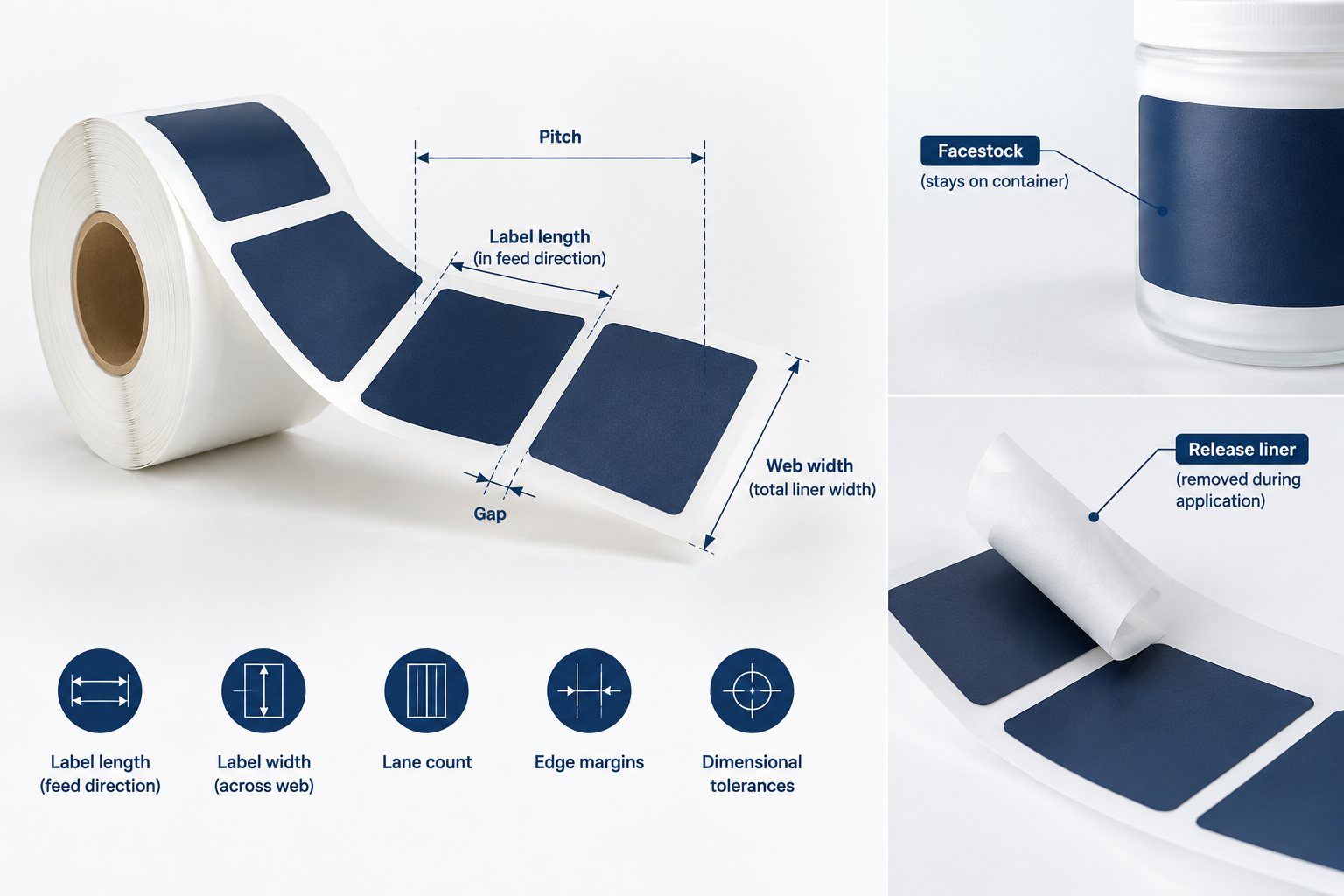
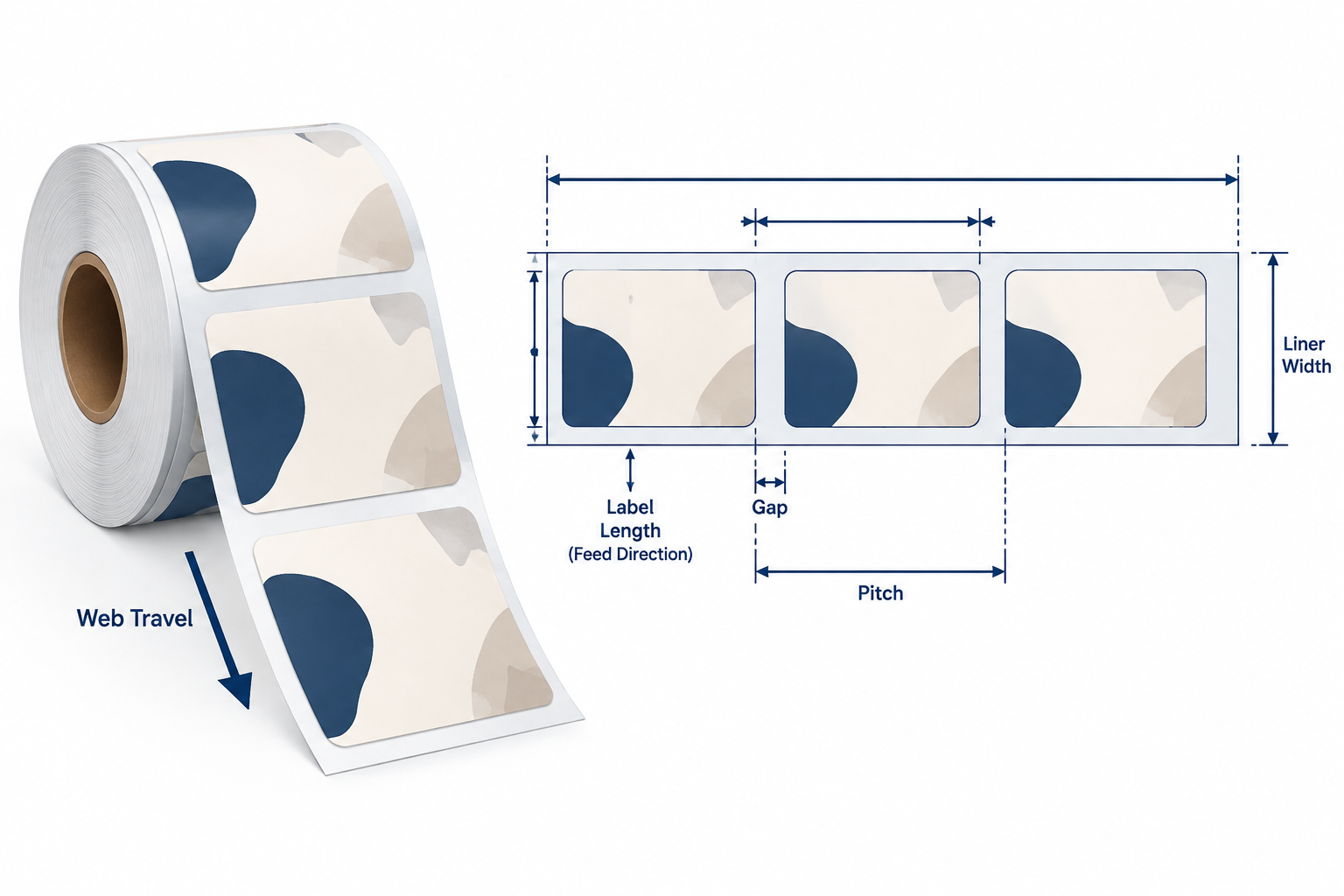
Dimension the label in the feed direction and across the web. Pitch is the distance from a point on one label to the corresponding point on the next. For evenly spaced, identical labels, it equals label length in the feed direction plus the inter-label gap.
Record total liner width, label position across the liner, edge margins, lane count, and agreed dimensional tolerances. Distinguish the release liner—the backing removed during application—from the facestock, which remains on the container.
Label Gaps, Die-Cut Quality, and Release Behavior
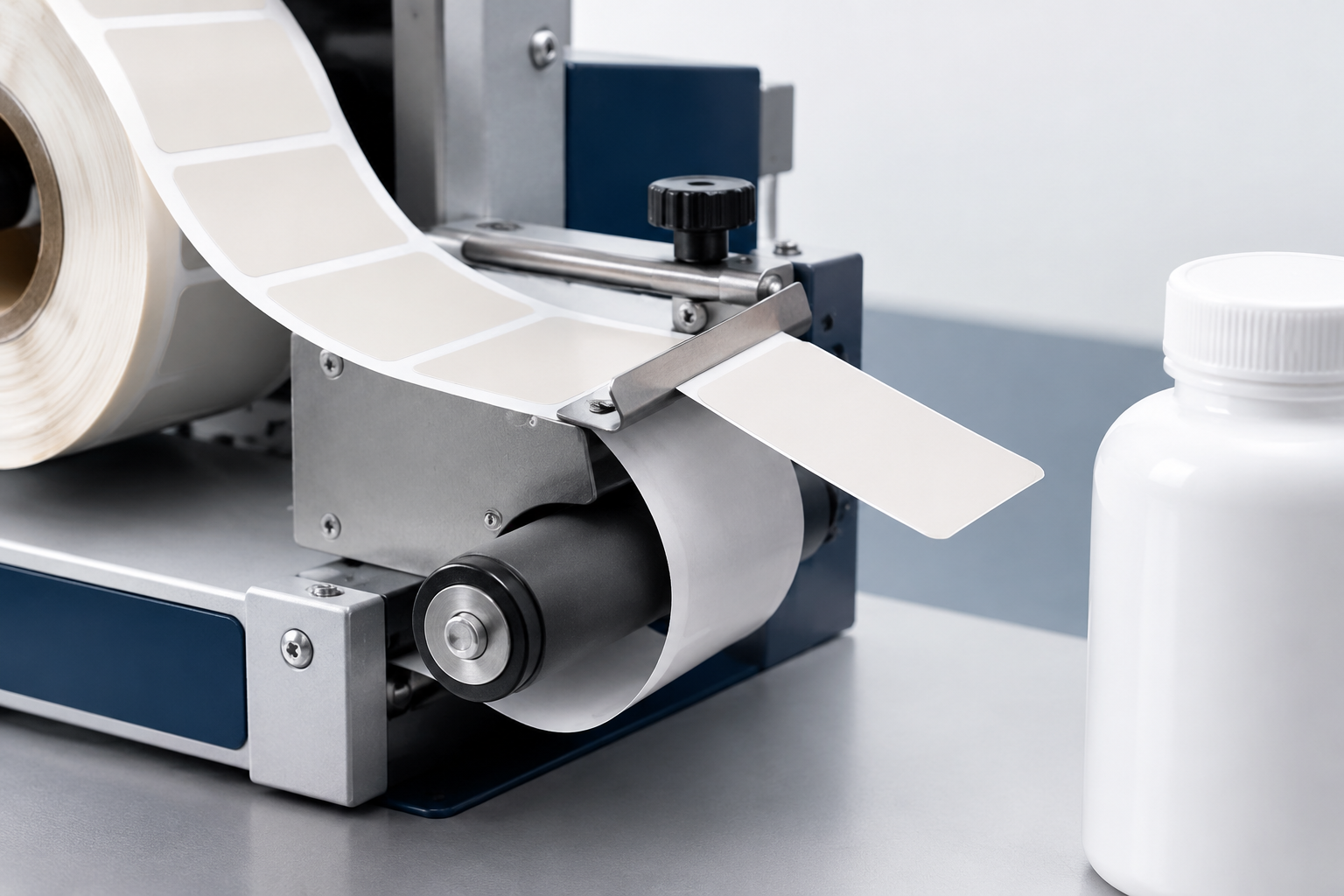
Label gap requirements come from the applicator’s sensing and dispensing limits, not a universal printing default. Specify the nominal gap and permitted variation against those limits.
Require clean matrix removal—the waste surrounding each label—and die cutting that separates the label without weakening the liner. Residual waste can disrupt detection; liner damage can cause web breaks under tension.
Release behavior also matters. The label must separate as the liner turns around the peel plate. Qualify the actual facestock, adhesive, liner, and finish together: a flexible label may follow the backing instead of dispensing. A successful hand-peel check does not establish machine performance.
Sensor Compatibility for Clear and Opaque Constructions
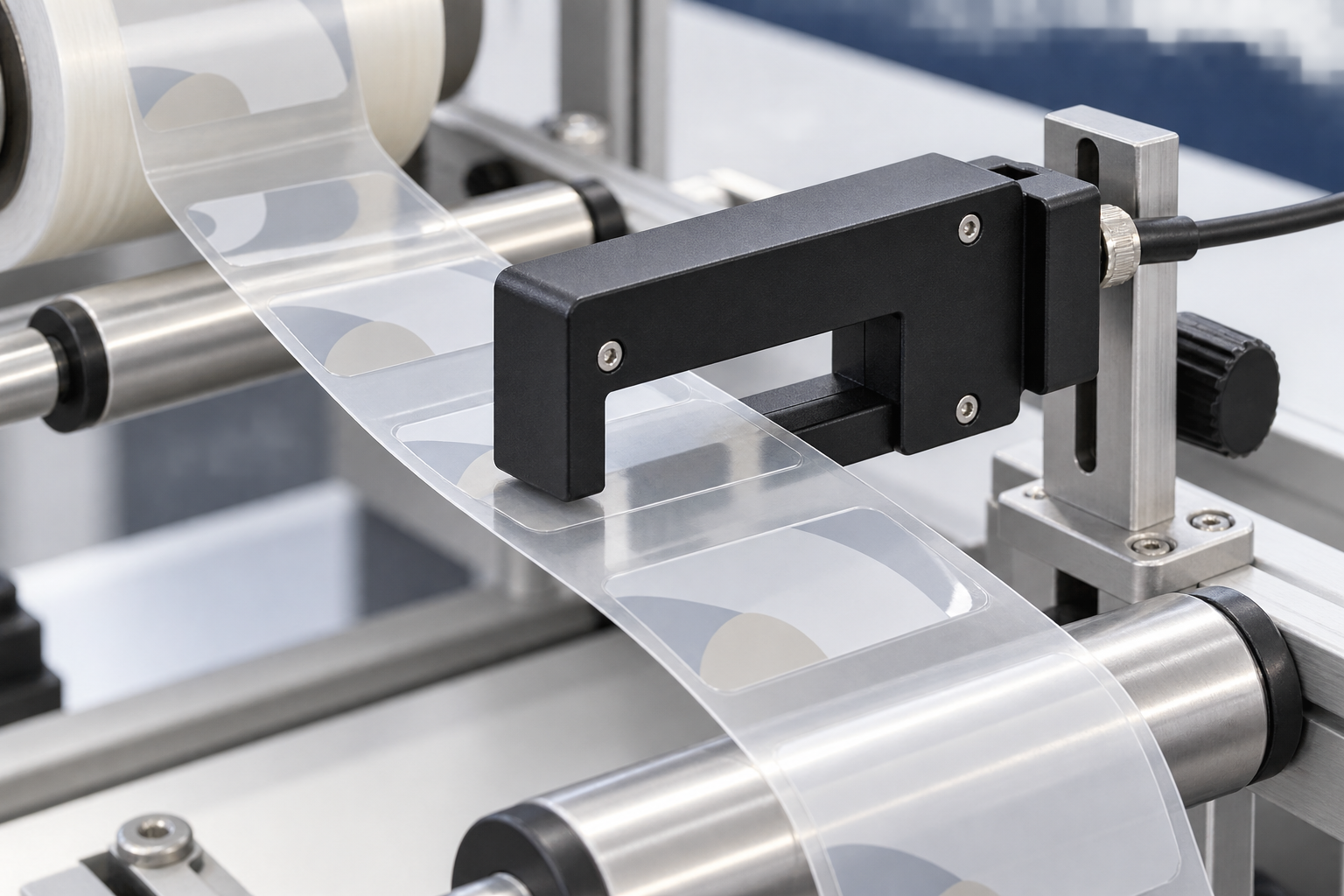
Clear labels need an applicator sensor check because the label and exposed liner may not provide enough contrast for the installed optical gap sensor. Opaque labels also need validation when metallic areas, heavy print, or liner changes affect the sensing path.
For clear transparent label options, identify the sensor make, model, operating principle, and sensing position. An ultrasonic sensor or a manufacturer-approved registration-mark arrangement may be appropriate, but neither is an automatic fix. Validate label sensor detection with the finished printed construction at operating speed and after stop–start cycles.
Comparison Table: Hand, Semi-Automatic, and Automatic Application
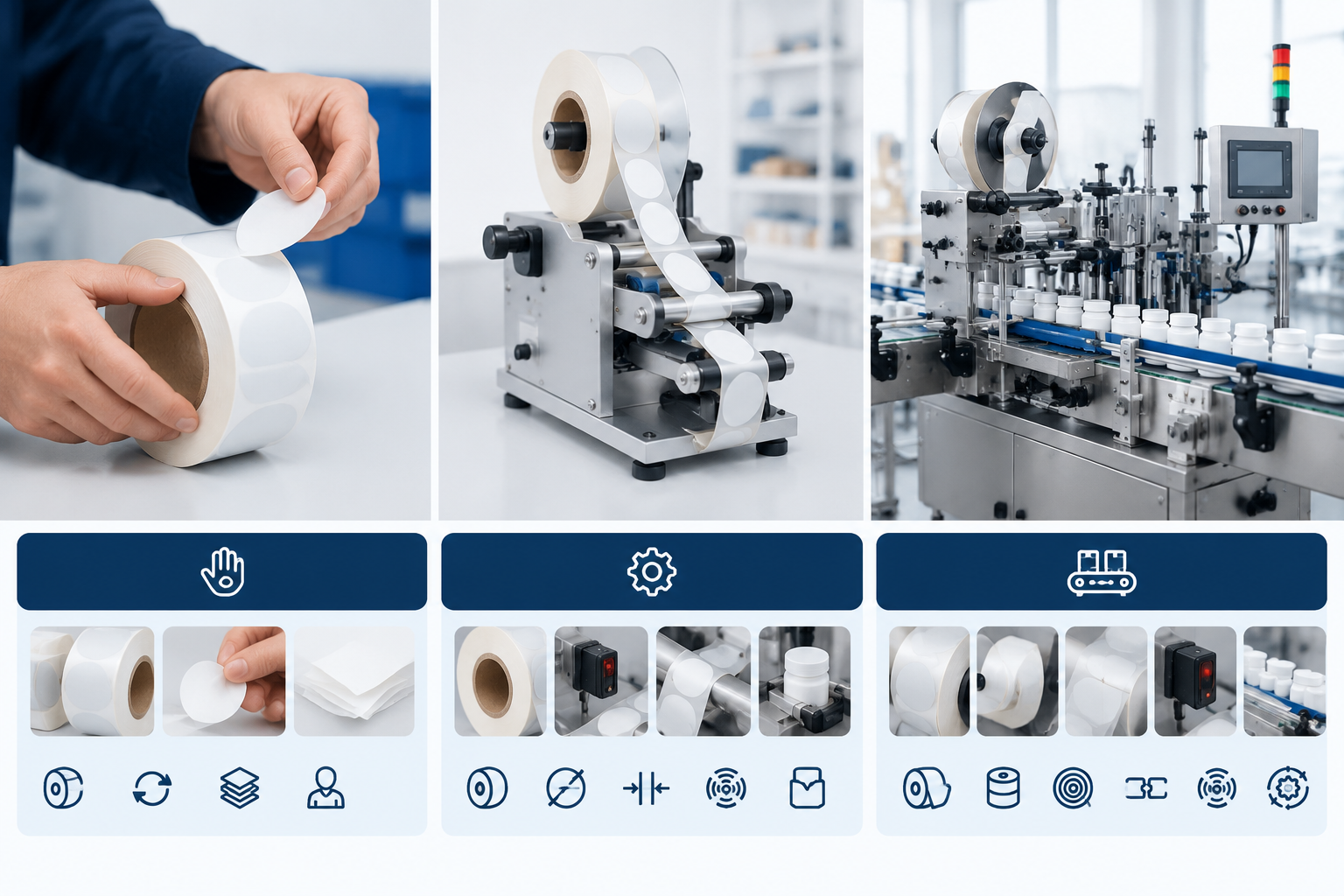
| Process | Ordering priority | Trial focus |
|---|---|---|
| Hand application | Manageable rolls, convenient orientation, easy liner separation; dispenser limits if used | Peeling, handling, placement consistency, operator fatigue |
| Semi-automatic | Core, diameter, gap, sensor, peel behavior, container fixture | Repeated triggering and placement across operators |
| Automatic | Full web specification, roll mass, winding, splices, detection, line synchronization | Sustained running, acceleration, restarts, roll changes, rejection handling |
Semi-automatic does not mean mechanically forgiving. A benchtop applicator may depend on the same precise gap detection and liner behavior as a larger line.
Follow a Trial Sequence With the Actual Container and Applicator
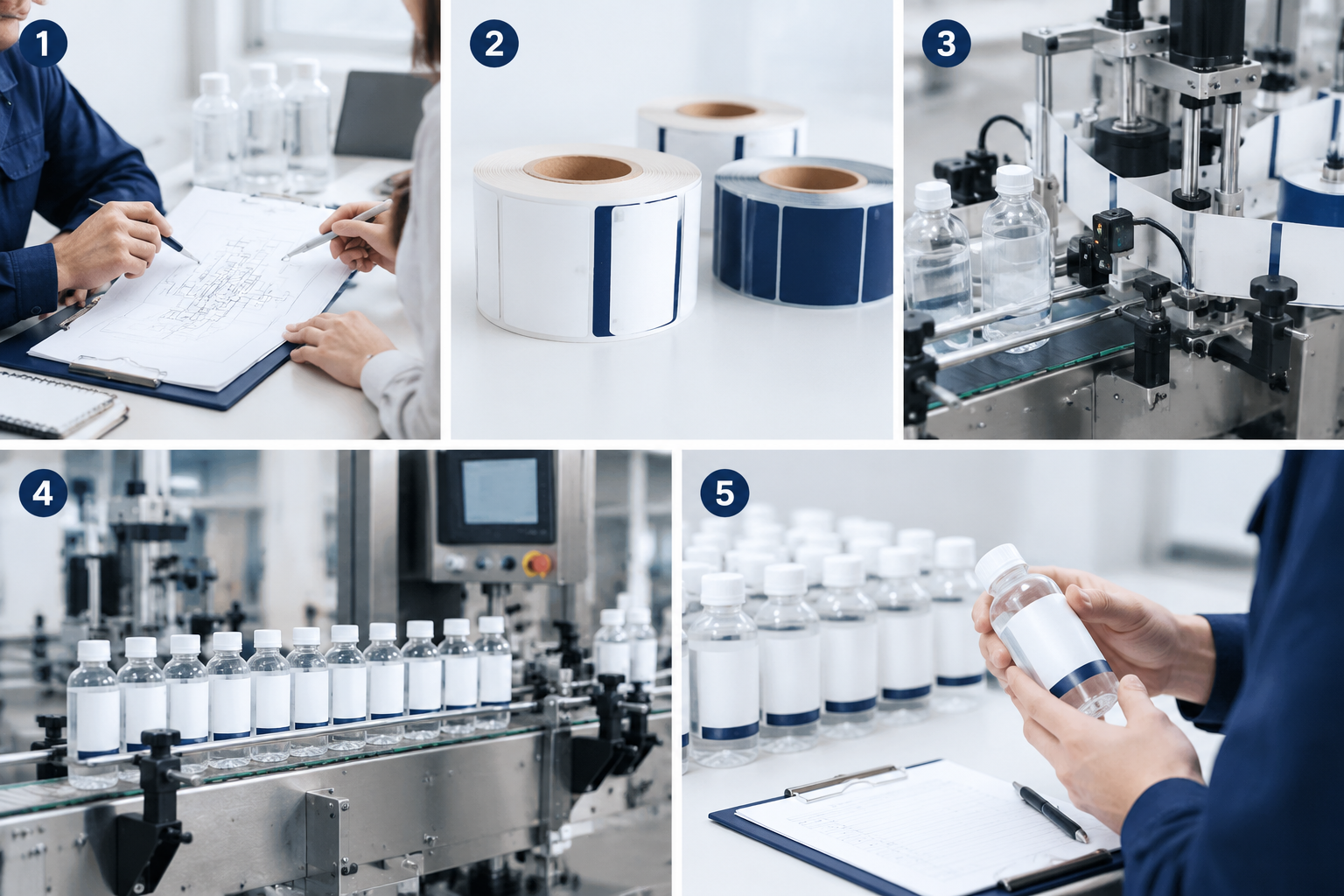
A label applicator trial should verify reliable feeding, label detection, clean dispensing, acceptable placement, and repeatable restarts with the actual container.
- Approve drawings and define pass/fail criteria with the line operator.
- Obtain trial rolls representing the proposed production construction and winding.
- Check threading, tracking, and sensor setup at controlled low speed.
- Run at the intended operating range, including stops and roll changes.
- Inspect labeled containers and record every intervention before release.
Use the intended filled or empty container state. Thin-wall bottles can behave differently when supported by their contents.
Check Feed, Dispensing, Placement, and Startup Waste

Track missed labels, double feeds, liner breaks, wrinkles, skew, bubbles, and wrap-seam position separately. Otherwise, a single reject count hides whether the problem is sensing, dispensing, container handling, or application pressure.
Measure placement against a defined container datum, such as the base or molded feature, using agreed limits. Inspect container taper, seams, and label-panel variation. Record startup waste independently from steady-running rejects; a roll that needs repeated adjustment is not production-ready just because several containers look good.
Record Trial Conditions and Repeat-Order Requirements
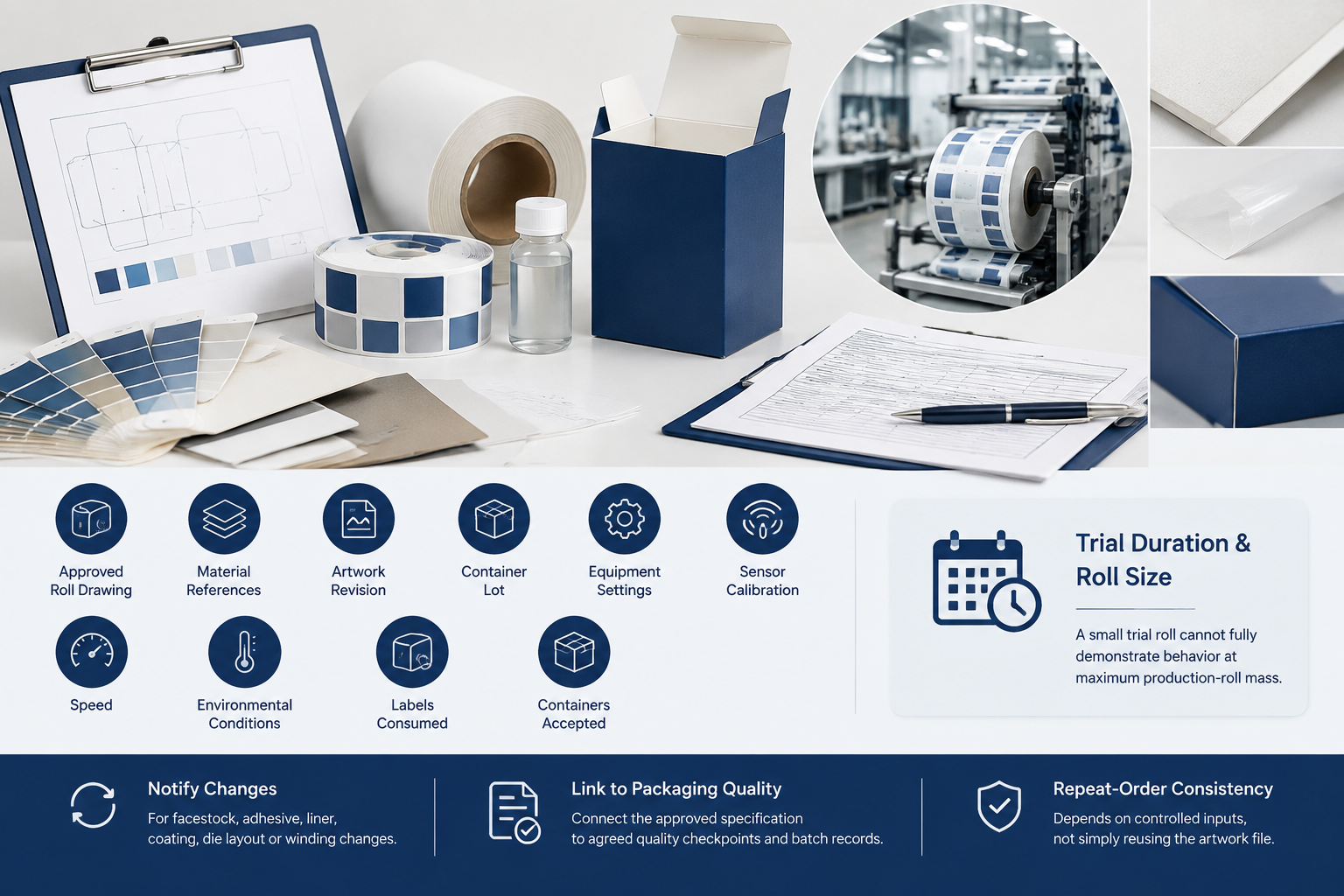
Retain the approved roll drawing, material references, artwork revision, container lot, equipment settings, sensor calibration, speed, environmental conditions, labels consumed, and containers accepted. State trial duration and roll size: a small trial roll cannot fully demonstrate behavior at maximum production-roll mass.
Require change notification for facestock, adhesive, liner, coating, die layout, or winding changes. Connect the approved specification to agreed packaging quality checkpoints and batch records. Repeat-order consistency depends on controlled inputs, not simply reusing the artwork file.
Account for Trial Rolls, Changeovers, and Rejected Labels

Compare project cost per accepted labeled container, not printed-label price alone. Include tooling, proofs, trial converting, courier charges, line setup, changeovers, discarded labels, and any damaged filled product.
Request separate prices for representative trial rolls and production quantities per stock-keeping unit (SKU), with roll counts and packing stated. Sampling cost, minimum order quantity, and timing are project-specific. Ask whether the trial uses the intended production materials and converting route; a cheaper substitute may answer the wrong question.
Frequently Asked Questions
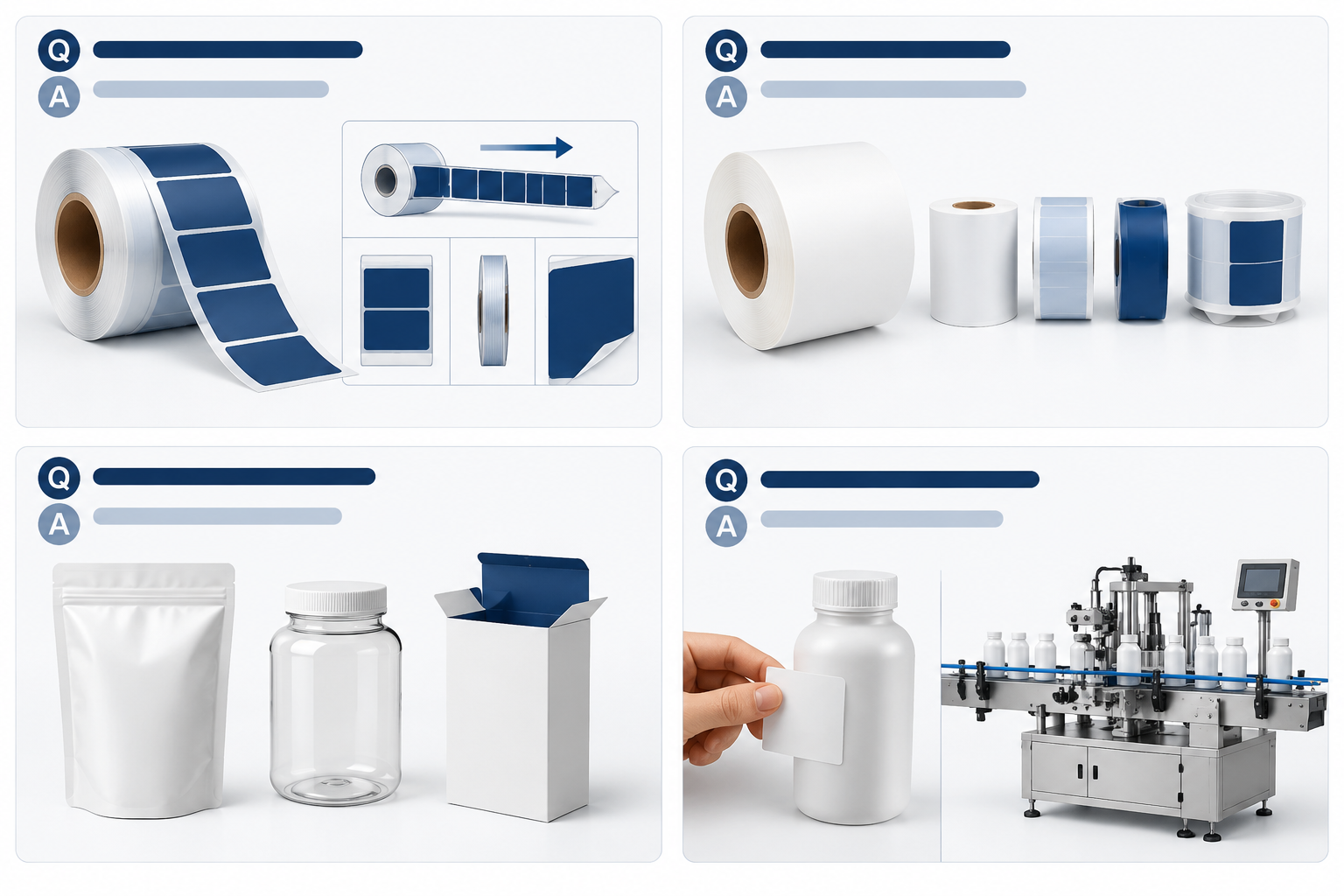
Can I order by an unwind number alone?
No. Attach the matching chart and approve a drawing showing web travel, printed face, viewing side, and leading artwork edge.
Does the correct core size guarantee applicator compatibility?
No. Outside diameter, roll weight, web width, pitch, liner, sensing, and dispensing behavior must also match the equipment.
Do all clear labels require ultrasonic sensors?
No. The appropriate sensing method depends on the finished construction and installed equipment. Confirm it with the machine supplier and a representative trial.
Can a hand-applied sample approve an automatic run?
It can support appearance and adhesion review, but it does not validate machine feeding, detection, dispensing, or placement at operating speed.
Send Your Applicator Details for a Roll Label Review
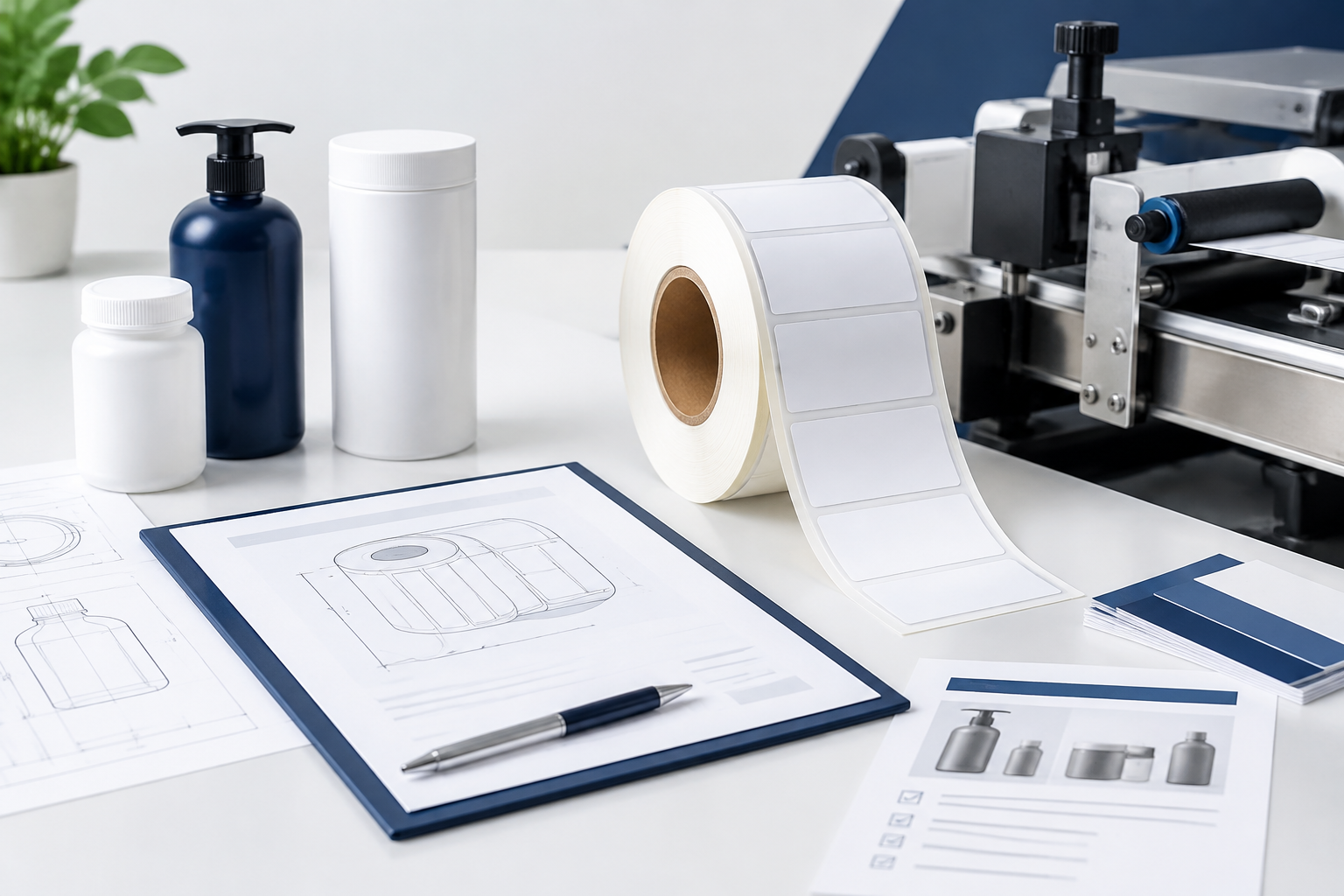
Key takeaways: approve the roll drawing, qualify the finished construction on the intended applicator, and lock the successful specification for repeat orders. Artwork approval is only one part of label applicator compatibility.
Prepare the equipment manual, container sample or drawing, roll-format requirements, sensor details, and trial acceptance criteria together. Those inputs turn a label inquiry into a usable technical brief.
FAQ
Can I order by an unwind number alone?
No. Attach the matching chart and approve a drawing showing web travel, printed face, viewing side, and leading artwork edge.
Does the correct core size guarantee applicator compatibility?
No. Outside diameter, roll weight, web width, pitch, liner, sensing, and dispensing behavior must also match the equipment.
Do all clear labels require ultrasonic sensors?
No. The appropriate sensing method depends on the finished construction and installed equipment. Confirm it with the machine supplier and a representative trial.
Can a hand-applied sample approve an automatic run?
It can support appearance and adhesion review, but it does not validate machine feeding, detection, dispensing, or placement at operating speed.
Plan Your Packaging Set With CosunPack
Share your product, container dimensions or fill capacity, quantity per SKU, material and finish preferences, artwork status, intended use, US destination, and target date. Include applicator documentation, sensor details, and the proposed roll drawing so CosunPack can review sampling and quotation requirements.
Use the contact page to prepare your inquiry, then review and send the email from your own account to [email protected]. The form does not send inquiries or upload files. Share confidential artwork only through an agreed channel after a nondisclosure agreement if needed. Trial-roll costs, courier charges, tooling, and timing require project-specific confirmation.
About CosunPack Engineering
CosunPack is an OEM/ODM packaging manufacturer established in 2008 in Guangzhou, China. We specialize in custom paper boxes, flexible barrier pouches, rigid boxes, and bottles with low MOQ and direct worldwide export.
Need Custom Packaging for Your Brand?
Get free dieline engineering support and a factory-direct quote in 24 hours.